 214-556-0555
SYNDROMIC SCOLIOSIS
Syndromic scoliosis refers to an abnormal sideways curvature of the spine that develops as a secondary manifestation of an underlying genetic or systemic syndrome, rather than occurring as an isolated condition. Because it is associated with broader medical conditions—such as Marfan syndrome, Ehlers-Danlos syndrome, Down syndrome, neurofibromatosis, or connective tissue disorders—it often presents as part of a complex clinical picture involving multiple organ systems. Unlike idiopathic scoliosis, which is the most common form and has no clearly defined cause, syndromic scoliosis is frequently more progressive, harder to manage with non-surgical bracing, and carries increased risks during surgical intervention due to the patient’s overall health and the nature of the associated syndrome.
At the Southwest Scoliosis and Spine Institute, our expert Scoliosis Doctors are dedicated to diagnosing and treating spinal problems in children. With advanced techniques and a compassionate approach, our team diagnoses, treats, and cares for patients suffering from Syndromic Scoliosis.

3 percent of individuals with progressive curvature may eventually experience severe problems that can include scoliosis and back pain, spinal problems, and nerve compression causing numbness, weakness, and leg pain.
Syndromic Scoliosis: A Comprehensive Guide for Parents
Syndromic scoliosis develops when a child has an underlying genetic syndrome or connective tissue disorder that affects the spine. Doctors classify this type as non-idiopathic scoliosis because they can identify the root cause, unlike the more common idiopathic form. Children with syndromic scoliosis often experience curves that appear earlier in life and progress more rapidly than typical cases. At Medical City Children’s Orthopedics and Spine Specialists, our pediatric team diagnoses and treats syndromic scoliosis every day. We focus on the whole child, not just the curve, because the underlying syndrome influences every decision we make.
What Causes Syndromic Scoliosis
Genetic syndromes and connective tissue disorders weaken the bones, ligaments, or muscles that support the spine. These conditions disrupt normal spinal alignment during growth. For example, Marfan syndrome causes overly flexible connective tissue, which lets the spine curve more easily. Neurofibromatosis type 1 produces tumors that press on spinal nerves and bones. Ehlers-Danlos syndrome leads to extremely loose ligaments that fail to hold vertebrae in place. Osteogenesis imperfecta makes bones fragile and prone to deformity. Prader-Willi syndrome, Rett syndrome, and other rare conditions also trigger syndromic scoliosis through muscle weakness, neurological changes, or abnormal bone development. Because the syndrome itself drives the curve, treatment must address both the spine and the broader medical needs of the child.
How Syndromic Scoliosis Differs from Other Types
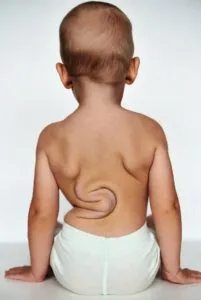 Syndromic scoliosis behaves differently from idiopathic and neuromuscular scoliosis. Idiopathic scoliosis appears without any known cause and usually affects healthy adolescents. Neuromuscular scoliosis stems from muscle weakness or nerve problems such as cerebral palsy. In contrast, syndromic scoliosis links directly to a genetic or systemic condition that affects multiple body systems. Curves in syndromic cases often start earlier—sometimes in infancy or early childhood—and progress faster. They frequently involve the entire spine, including the neck or pelvis, and doctors see more complex patterns such as sharp angular curves or kyphoscoliosis (a combination of side-to-side and front-to-back deformity). Children with syndromic scoliosis also face higher surgical risks because of heart, lung, or bone-quality issues tied to their syndrome. These differences require our team to create highly individualized plans rather than follow standard idiopathic protocols.
Questions and Answers
Will my child’s curve get worse, and how fast will it progress?
Syndromic scoliosis often progresses more quickly than ordinary idiopathic scoliosis because the underlying genetic condition affects bone strength, ligament stability, or muscle support. The rate of progression depends on your child’s specific syndrome, current curve size, and how much growth they have left. Curves in syndromic cases can worsen significantly during growth spurts, sometimes even after the child stops growing.
That is why we monitor your child closely with X-rays every 4 to 6 months. The good news is that early detection allows us to intervene before the curve becomes severe. With consistent follow-up and timely treatment — whether bracing, specialized therapy, or surgery when needed — we can often slow or control progression and protect your child’s spine, lungs, and overall functions.
Will my child need surgery, and what are the risks?
Not every child with syndromic scoliosis needs surgery, but the chance is higher than with regular idiopathic scoliosis. We start with the least invasive options that make sense for your child’s age and curve. Many children do well with bracing and close observation. However, because syndromic curves tend to be stiffer and progress faster, surgery becomes necessary in a larger percentage of cases — usually when the curve reaches 45–50 degrees or causes significant deformity or breathing issues.
When surgery is required, we use techniques tailored to the specific syndrome, such as growing rods or vertebral body tethering when possible, to allow continued growth. Risks exist with any surgery, including infection, bleeding, or complications related to the underlying syndrome (for example, heart or lung issues in Marfan syndrome). Our team carefully reviews every child’s full medical picture and works with other specialists to minimize those risks. Most children who need surgery go on to have excellent long-term results and improved quality of life.
Can my child still live a normal, active life and participate in sports?
Yes — the goal of treatment is to help your child live as normal and active a life as possible. Many children with syndromic scoliosis participate fully in school, play, and even sports, though we may need to modify activities depending on curve size and the specific syndrome. We encourage physical activity because strong core muscles and good posture help support the spine.
If your child wears a brace, we work with families to find times or activities where the brace can come off safely. After successful treatment or surgery, most children return to the activities they enjoy. We focus not only on straightening the spine but also on preserving lung function, balance, and confidence. With proper management, the majority of children with syndromic scoliosis grow up to lead happy, active lives with minimal limitation
The Southwest Scoliosis and Spine Institute specializes in Scoliosis. Call us and Stop the Pain
Common Syndromes Associated with Syndromic Scoliosis
Doctors see several syndromes most often in children with syndromic scoliosis:
- Marfan syndrome: Tall stature, long limbs, and flexible joints lead to thoracic curves that can affect heart valves and the aorta.
- Neurofibromatosis type 1: Benign tumors (neurofibromas) grow along nerves and distort vertebrae, causing sharp, short curves that sometimes need early surgery.
- Ehlers-Danlos syndrome: Extremely loose ligaments allow the spine to shift easily; patients bruise and heal slowly, so surgeons adjust techniques carefully.
- Osteogenesis imperfecta: Brittle bones fracture easily and heal with deformity; bracing helps protect the spine while doctors manage fractures elsewhere.
- Prader-Willi syndrome: Low muscle tone and rapid weight gain increase curve risk; growth hormone therapy sometimes affects spinal alignment.
- Rett syndrome: Neurological regression leads to severe trunk weakness and C-shaped curves that require close respiratory monitoring.
Each syndrome presents unique challenges, so our specialists coordinate with geneticists, cardiologists, pulmonologists, and other experts to keep your child safe. To learn more about children with scoliosis, review the content on the Pediatric Scoliosis Hub on this website.
Signs and Symptoms Parents Should Watch For
Parents often notice syndromic scoliosis during routine check-ups or when they see asymmetry. Common signs include one shoulder higher than the other, an uneven waistline, one hip that protrudes more, or a visible rib hump when the child bends forward. Children may lean to one side while standing or walking. In some syndromes, back pain appears earlier than in idiopathic cases. Parents of children with known syndromes should ask their pediatrician about spinal screening at every well-child visit. Early detection gives us more treatment options and better chances of avoiding surgery.
How Doctors Diagnose Syndromic Scoliosis
Diagnosis begins with a detailed history and physical exam. Doctors measure the curve on standing X-rays using the Cobb angle; a measurement of 10 degrees or more confirms scoliosis. Because the curve links to a syndrome, we order genetic testing, MRI scans of the spine and brain, or echocardiograms when needed. Our team uses low-dose EOS imaging whenever possible to reduce radiation exposure in growing children. We also assess skeletal maturity with the Risser sign to predict how much growth remains and how quickly the curve might worsen. This comprehensive evaluation helps us create a plan that addresses both the spine and the child’s overall health.
Treatment Options for Syndromic Scoliosis
Treatment depends on the child’s age, curve size, remaining growth, and the specific syndrome. We always start with the least invasive approach that makes sense.
- Observation: For very mild curves (under 20–25 degrees), we monitor with X-rays every 4 to 6 months. Many small curves stay stable when we catch them early.
- Bracing: Custom braces help control moderate curves in flexible spines. We adjust the design to fit the child’s syndrome—for example, we use lighter materials for children with fragile bones.
- Physical therapy: Schroth-method exercises strengthen core muscles and improve posture. Therapists tailor programs to the child’s muscle tone and joint laxity.
- Surgery: When curves exceed 45–50 degrees or progress rapidly, surgery becomes the best option. Surgeons may use growing rods, vertebral body tethering, or fusion, but they modify techniques for each syndrome. For instance, they reinforce bone in osteogenesis imperfecta cases or avoid certain implants in children with poor healing. Our goal remains the same: to give your child a straight, balanced spine while protecting heart, lung, and neurological function.
Throughout treatment, our multidisciplinary team coordinates care so families manage only one appointment schedule instead of many.
Long-Term Outlook
With early diagnosis and expert care, most children with syndromic scoliosis grow up active and independent. Some need ongoing monitoring into adulthood, especially if the underlying syndrome affects bone density or heart health. Modern techniques have dramatically improved outcomes compared to even ten years ago. Children who receive timely bracing or growth-friendly surgery often avoid major deformity and maintain good lung function and posture. At our practice, we track every patient through skeletal maturity and beyond, so we can catch any late changes quickly.
Why Families Choose The Southwest Scoliosis and Spine Institute
We bring years of experience managing complex syndromic scoliosis cases and work closely with families to create plans that fit their child’s unique needs. We also maintain strong relationships with your child’s pediatrician and other specialists so everyone stays on the same page.
If you suspect syndromic scoliosis or already have a diagnosis, schedule an evaluation with our team. Early action gives your child the widest range of treatment options and the best chance for a healthy, active future. Call us today or visit our website to request an appointment. We look forward to partnering with you.
At the Southwest Scoliosis and Spine Institute, we focus on Scoliosis Diagnosis, Treatment, & Care for our Patients. Our fellowship-trained, board-certified expert orthopedic scoliosis surgeons, Richard Hostin, MD, Devesh Ramnath, MD, Ishaq Syed, MD, Shyam Kishan, MD, and Kathryn Wiesman, MD, specialize in all types of spine conditions, deformities, and scoliosis pain.
To aid our patients and provide convenience, the Southwest Scoliosis and Spine Institute maintains offices in Dallas, Plano, and Frisco, Texas, where we have treated over 100,000 patients and performed more than 16,000 successful scoliosis surgeries, including complex and revision cases. Patients should choose the doctors from the Southwest Scoliosis and Spine Institute due to their unparalleled expertise and experience. Finally, the team’s commitment to personalized care ensures that each patient receives a tailored treatment plan. Additionally, the institute’s focus on cutting-edge research and advanced surgical techniques provides patients with the best possible outcomes, enhancing both function and quality of life.
____________________
Citation: Scoliosis Research Society – Syndromic Scoliosis
The medical content on this page has been carefully reviewed. It was approved for accuracy by the Southwest Scoliosis and Spine Institute’s qualified healthcare professionals. This includes our board-certified physicians and Physician Assistants. Our team ensures that all information reflects the latest evidence-based practices and meets rigorous standards of medical accuracy, with oversight from our expert spine doctors to guarantee the reliability of our information for our patients.
If you or a loved one suffers from spinal pain, you owe it to yourself to call Southwest Scoliosis and Spine Institute at 214-556-0555 to make an appointment.